Carrie Fehr

Kitchen Garden Food

Category: From the Classroom

The Soul Of Ancient Grains

By Carrie Fehr

Inspired by a 3rd grade student who raises an important philosophical question when she asks, “Do whole grains have souls?”

Throughout history, ancient cultures have regarded grains as a sacred food, like medicine for the soul, it symbolized the essence of their spirituality that meant more than just sustenance, but also helped shape and influence their daily culinary, ritual, and spiritual practice.

Ancient grains tell stories about past civilizations that offer insights into their traditions and cultural values that were important to their life. Quinoa, the legendary grain of the Incas, was known to sustain the body with endurance and to increase deeper spiritual powers through meditation, and with respect, it was honored as the “mother grain.” Aztecs highly valued amaranth as “the food of the gods,” and for its supernatural health properties that was central to their spiritual rituals.  In the Hindu culture, grains played a role in important rite of passage ceremonies beginning with the ritual of baby’s first solid food, or spiritual food called the “feeding of the grains;” as well as, in weddings and in after life– funerals.

With appreciation for the deeper meaning of ancient grains that was once held sacred, and kept close at heart, I am mindful of my student, and her profound sense of curiosity to express a question the great philosopher, Socrates might ask– Do whole grains have a soul?

The Science Of Food: The Chef And The Scientist

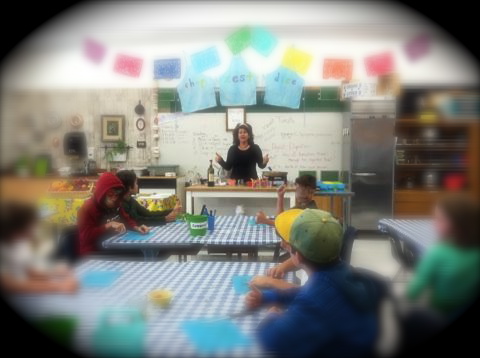
Teaching science through the lens of cooking encourages students to understand the valuable connection between a chef and scientist, and offers a rich stew of inquiry-based science lessons that reinforces the vital role food plays in our health.

The Lesson:  In the science of cooking lesson, fifth graders explore the relationship of cellular respiration, a process about how cells extract energy from food– and its impact on our health.  In the concept of cellular respiration, students learn that the human body uses sugar glucose as a main source of energy, and when combined with oxygen, it will release that energy.  For example, eating simple carbohydrates, will offer a quick boost of energy, but the excess glucose (energy) will convert into fat, also increasing the risk for developing diabetes, high blood pressure, and obesity, an epidemic that according to experts affects one out of three children and teens.  Eating foods rich in complex carbohydrates like fruits, vegetables, and whole grains, will breakdown the glucose more slowly, process the energy more efficiently,  and will help  lower the risk for getting diseases.

The Experiment: To prove the effects of cellular respiration, students investigate three different nutrient sources from the recipe, Three Sisters Succotash aka Corn, Beans, and Squash.  Yeast, a single cell organism that can convert sugar into carbon dioxide, is mixed with each nutrient source, and then sealed inside a plastic bag submerged in a warm water bath.  For comparison purposes, students create a fourth variable that is only sugar.  Students make predictions on what they think will happen between the nutrient sources and the sugar.  Lucky this is the science of cooking class, because students now put on their chef hats and prepare the recipe, Three Sisters Succotash, while waiting on the outcome of the cellular respiration experiment.

As another epic class concludes, the results of the experiment confirm that sugar processes energy the fastest, but yet the message is clear:  slow and steady, corn, beans, and squash will win the race, the marathon of all–good health.


The Art Of Storytelling: Connecting Literacy in the Cooking Classroom

IMG_0658 In cooking class, students discover the historical significance of the Three Sisters–corn, beans, and squash, and their important relationship to each other in the garden through the art of storytelling.  Storytelling is a fun and meaningful teaching technique that not only supports literacy efforts in the classroom, but also allows students to apply their knowledge into a different context of learning.  It benefits students of all learning styles, encourages imagination, and develops their listening skills.  Additionally, the story helps to reinforce a positive attitude towards healthy food, since the underlying theme skillfully integrates the nutritional benefits of the Three Sisters, along with a cooking lab activity that follows.


The Mathematics of Cooking

The cooking classroom is a perfect learning environment for students to see their academic lessons come to life.  Students develop cooking skills while connecting core academic subjects with healthy food.  It allows students to practice important concepts through hands-on cooking activities focused on math, science, or language arts.

In cooking class, students apply their math skills as they combine ingredients for a recipe using a variety of measuring tools. The ingredients in a recipe have an important relationship to each other that is similar to concepts in math, and as a result, in math, equations express those relationships.  In the recipe, Honey Oat Topping, students learn there are different ways to express the same units of measurements using the concept of cooking equivalents, equal but different such as 3 teaspoons = 1 tablespoon, or 1/4 teaspoon = 1 pinch.                 

Local Tree Fruits!

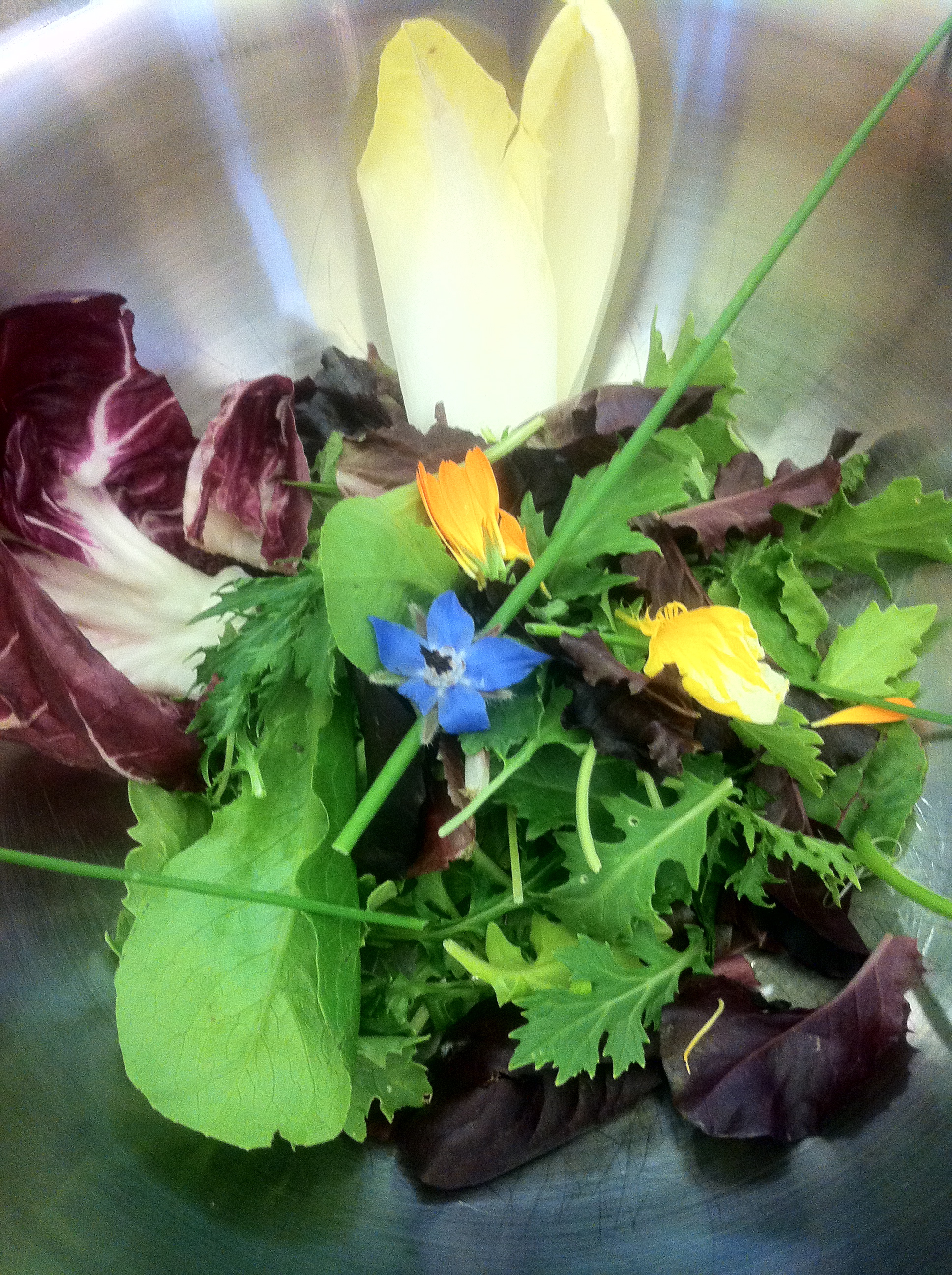
May Brings Salad Greens!


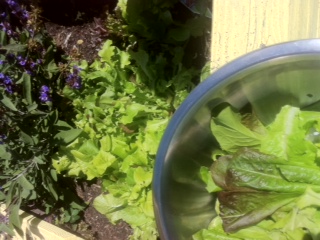
                                                 Harvesting a variety of salad greens from our garden box.