Carrie Fehr

Kitchen Garden Food

Category: Food

Meditation On A Citrus Fruit

The cheerful colors, fragrance and sweet taste of seasonal citrus fruit, bring a burst of sunshine in the middle of winter that enliven our senses, as we welcome the New Year with positive energy.

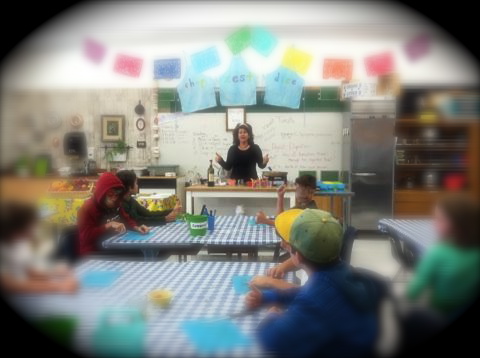
To celebrate the citrus harvest, students begin cooking classes with a time-honored tradition of meditating on a satsuma mandarin orange.  Through mindful eating practices, students learn how to awaken a deeper appreciation of the food they eat, and become more conscious of the connection it has to their health and environment.  As we pause and refresh our breath, we close our eyes, and savor the beauty of the mandarin, with gratitude for its nourishment, and its sweet nectar that embrace all our senses.  And with the knowledge that it belongs to a greater whole—the land, sun, and sky—we fully appreciate the splendor of this gift of nature, in this precious moment of calm and stillness.

Berkeley Schools: A Sustainable Food Model

By Carrie Fehr

Imagine a school that serves up healthy cafeteria food sourced by local farms, respects the environment, supports garden and cooking education in the classroom, and makes a positive difference in the community.

The Berkeley Unified School District, a national model for school food reform, exemplifies such a commitment to its students, and understands the important role it has in promoting health, sustainable agriculture, and environmental restoration.

It is no surprise that Berkeley is home to visionary chef Alice Waters, who has long championed the benefits of eating seasonally, and also helped provide a grant from her Chez Panisse Foundation, to hire Ann Cooper, aka Renegade Lunch Lady, to improve the quality of the school food, district wide several years ago. Since the overhaul to food services, some of the benefits to the schools include– universal breakfast, salad bars, cooking class recipes that link to the cafeteria, along with a take-home calendar, featuring healthy recipes that kids prepare at school.

But even though there are significant changes to the school food, the heart of the programs rely on the cooking and gardening education classes that link to core subjects in the classroom, and provide students with hands-on learning opportunities about food, the environment, and nutrition.  It makes a huge difference when kids are actively involved in the farm to table process, both in the cafeteria and at home– if they grow, cook, and learn about it, they will be willing to try it and discover that healthy food tastes good.

To reinforce the vital link food has to our health, it is important to recognize the valuable relationship between local farms and the food we serve at school, to the way we treat our environment, and its impact on how we teach our children about food, and their health.

And as a nation, we have a social responsibility to take steps to improve the health of our children, with learning opportunities that begin at school.

This post appeared on the Fedupwithlunch guest blog at: http://fedupwithlunch.com/category/happening-now/guest-blogs/

Carrie Fehr begins her twelfth year as Chef Teacher for the cooking & gardening program in the Berkeley Unified School District.  She has developed an expansive repertoire of cooking lessons that skillfully integrate core academic subjects, culinary concepts, and nutrition education. The cooking classroom is a perfect match for Carrie’s love and passion for teaching children.  Her goal is to bring a positive emotional connection to healthy food and to instill an appreciation of wellbeing for every student, that will be accessible lifelong.

Carrie is available for consulting please contact her at carriefehr@gmail.com or visit her blog http://www.kidseatingright.wordpress.com or on twitter at http://twitter.com/CarrieFehr

2011 Highlights: The Short List

As the year comes to a close, it gives me an opportunity to reflect on the memorable highlights– beginning with favorite meals, of course!  Here is my short list for 2011:

Lunch at Old Ebbitt Grill across from the White House in  DC                           www.ebbitt.com

Dinner at Momo Sushi Shack in Brooklyn, New York                                                           http://momosushishack.com

Still Love the Pizza at Pizzaiolo, Oakland                                            www.pizzaiolooakland.com

Needs No Introduction– Sandwiches from The Local Butcher Shop in Berkeley www.thelocalbutchershop.com

Aprés Yoga– Miso Soup from Kirala To Go, Berkeley                           www.kiralaberkeley.com

The Art of Carving a Turkey thanks to Youtube!                               www.youtube.com/watch?v=5GCdkuQoLrY

Beam Me Up with Electrolytes from The Science of Cooking  kidseatingright.wordpress.com/2011/11/19/the-science-of-cooking

Thanksgiving Baking Session: Persimmon Pudding, Ginger Cake, and Pink Lady Apple-Frangipane Galettes, with my co-worker Patty, email me for the recipes! carriefehr@gmail.com

Yay for Social Media—Twitter                                                                     twitter.com/CarrieFehr

Let’s Hear it for School Food Blogging                                         www.kidseatingright.wordpress.com

And a Drum Roll Please–For Therapy Dog Training a Chocolate Labrador Named Rocky   kidseatingright.wordpress.com/in-the-classroom-2

The Science Of Food: The Chef And The Scientist

Teaching science through the lens of cooking encourages students to understand the valuable connection between a chef and scientist, and offers a rich stew of inquiry-based science lessons that reinforces the vital role food plays in our health.

The Lesson:  In the science of cooking lesson, fifth graders explore the relationship of cellular respiration, a process about how cells extract energy from food– and its impact on our health.  In the concept of cellular respiration, students learn that the human body uses sugar glucose as a main source of energy, and when combined with oxygen, it will release that energy.  For example, eating simple carbohydrates, will offer a quick boost of energy, but the excess glucose (energy) will convert into fat, also increasing the risk for developing diabetes, high blood pressure, and obesity, an epidemic that according to experts affects one out of three children and teens.  Eating foods rich in complex carbohydrates like fruits, vegetables, and whole grains, will breakdown the glucose more slowly, process the energy more efficiently,  and will help  lower the risk for getting diseases.

The Experiment: To prove the effects of cellular respiration, students investigate three different nutrient sources from the recipe, Three Sisters Succotash aka Corn, Beans, and Squash.  Yeast, a single cell organism that can convert sugar into carbon dioxide, is mixed with each nutrient source, and then sealed inside a plastic bag submerged in a warm water bath.  For comparison purposes, students create a fourth variable that is only sugar.  Students make predictions on what they think will happen between the nutrient sources and the sugar.  Lucky this is the science of cooking class, because students now put on their chef hats and prepare the recipe, Three Sisters Succotash, while waiting on the outcome of the cellular respiration experiment.

As another epic class concludes, the results of the experiment confirm that sugar processes energy the fastest, but yet the message is clear:  slow and steady, corn, beans, and squash will win the race, the marathon of all–good health.


The Art Of Storytelling: Connecting Literacy in the Cooking Classroom

IMG_0658 In cooking class, students discover the historical significance of the Three Sisters–corn, beans, and squash, and their important relationship to each other in the garden through the art of storytelling.  Storytelling is a fun and meaningful teaching technique that not only supports literacy efforts in the classroom, but also allows students to apply their knowledge into a different context of learning.  It benefits students of all learning styles, encourages imagination, and develops their listening skills.  Additionally, the story helps to reinforce a positive attitude towards healthy food, since the underlying theme skillfully integrates the nutritional benefits of the Three Sisters, along with a cooking lab activity that follows.


The Mathematics of Cooking

The cooking classroom is a perfect learning environment for students to see their academic lessons come to life.  Students develop cooking skills while connecting core academic subjects with healthy food.  It allows students to practice important concepts through hands-on cooking activities focused on math, science, or language arts.

In cooking class, students apply their math skills as they combine ingredients for a recipe using a variety of measuring tools. The ingredients in a recipe have an important relationship to each other that is similar to concepts in math, and as a result, in math, equations express those relationships.  In the recipe, Honey Oat Topping, students learn there are different ways to express the same units of measurements using the concept of cooking equivalents, equal but different such as 3 teaspoons = 1 tablespoon, or 1/4 teaspoon = 1 pinch.